Sounding At Sea — world premiere
On the opening night of GIOfest XVIII (Thursday 26 November, Glasgow School of Art, Reid Building), Alex presents the world premiere of Sounding At Sea, a new multi-artform project led by Alex and creative XR technologist Michal Lovecky.
Exploring the effects of human noise pollution on orcas and other marine mammals, the project combines virtual reality, movement and improvised music. Movement artists immersed in a virtual underwater environment generate live visual material which is projected into the performance space and simultaneously becomes a constantly changing graphic score for improvising musicians.
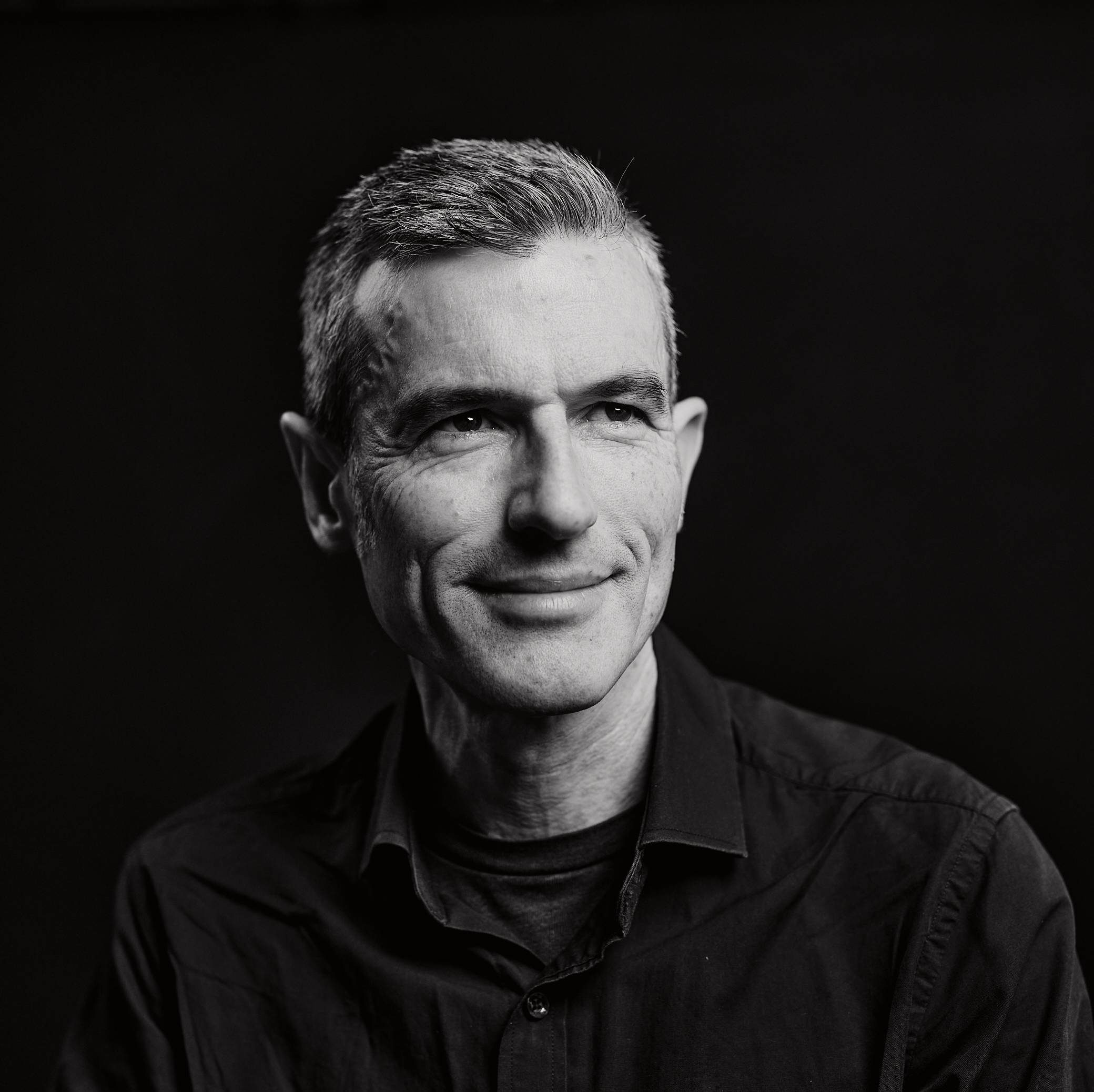
About Alex
Alex South is a Glasgow-based musician and researcher inspired by the sounds of the more-than-human world. He creates and performs live music for clarinets and electronics, often in multi-artform collaborations, and teaches on undergraduate courses at the Royal Conservatoire of Scotland and the University of St Andrews.
As a soloist Alex has been acclaimed for his “virtuoso ability” (The Herald) and “hedonistic verve” (The Scotsman), and he has performed and recorded with Lori Freedman, Evan Parker, Alasdair Roberts and the BBC Scottish Symphony Orchestra.
His compositions, including collaborations with Glasgow Improvisers Orchestra, Nordic Viola, Scottish Clarinet Quartet, Scottish Dance Theatre, Sequoia, and The One Ensemble, have been performed on international stages across Europe, the Americas, and Australia, and featured in The Musical Animal, broadcast in 2022 in Canada by the CBC.
Alex holds degrees in the Natural Sciences (University of Cambridge), Clarinet Performance (RCS), and Philosophy (University of Glasgow). For his 2024 PhD dissertation, Cetacean Citations (RCS/University of St Andrews), Alex integrated practice-led research from the perspectives of ecomusicology and zoömusicology with bioacoustical analysis of the rhythms of humpback whale song. This led to a Postdoctoral Fellowship at IASH (University of Edinburgh) and numerous publications on animal culture, biomusicology, and ecomusicology.